Content operations and creative operations at enterprise scale


For most of the last decade, content and creative operations meant keeping work moving. Intake forms, briefs, traffic meetings, resourcing, routing, proofing and approvals. The job was to make sure the right request reached the right person and came back approved on time.
That job still matters. But at enterprise scale it is running out of road. When a brand needs every product in every market, channel, retailer and format, there is no amount of traffic management that keeps up, because the work itself grows faster than any team can route it. The ops leaders who are pulling ahead are shifting from managing the work to owning the system that produces it.
This guide explains what content operations and creative operations are, how they differ from marketing operations, why the traditional model breaks, and what the role looks like when ops becomes the owner of the production system.
What is content operations?
Content operations (content ops) is the discipline that designs and runs how an organization plans, produces, approves, stores, adapts and delivers content across channels and markets. It owns the people, workflows, rules, data and tools behind content, so output can scale in volume and speed without losing quality, compliance or brand consistency.
Content marketing operations is the same discipline applied to the marketing program. In larger organizations, content ops may also cover product, support and editorial content.
What is creative operations?
Creative operations (creative ops) is the function that runs the production side of creative work: intake and briefing, resourcing, studio and agency coordination, review and approval, brand compliance and asset delivery. Its goal is to let designers, photographers and art directors produce more on-brand visual work, faster, by removing friction and repetitive production tasks.
Creative ops is often the more visual, production-heavy sibling of content ops. In many enterprises the two have merged, or sit in the same team, especially where visual content (product imagery, campaign adaptations, retail and e-commerce assets) makes up most of the volume.
Content ops vs creative ops vs marketing ops
The three functions overlap and are often confused. A practical way to separate them:
| Content operations | Creative operations | Marketing operations | |
|---|---|---|---|
| Core question | How does content get planned, made and delivered across channels? | How does creative and visual work get produced, reviewed and delivered? | How do campaigns run, and how is performance measured? |
| Main output | All content types: copy, web, product, editorial, visual | Visual and creative assets: imagery, video, design, adaptations | Campaigns, audiences, journeys, data and reporting |
| Typical owner | Head of content operations, content ops lead | Director of creative operations, in-house agency or studio lead | Marketing operations director, martech lead |
| Key systems | CMS, DAM, PIM, workflow tools | Work management, proofing, DAM, production and automation platforms | Marketing automation, CRM, analytics, attribution |
| Core metrics | Throughput, lead time, reuse, cost per asset | Lead time, approval rounds, rework, cost per asset | Pipeline, conversion, ROI, data quality |
| Where they overlap | Intake, briefs, asset management, governance | Intake, briefs, asset management, governance | Briefs and campaign calendars |
Why the traditional ops model breaks at enterprise scale
The volume curve has changed shape. In Adobe research across more than 1,600 marketers, published in June 2025, 71% said they expect content demand to grow fivefold or more by 2027. BCG describes a large consumer goods company that used to create around 500 assets a year and now needs “somewhere on the order of five to six million.”
The traditional ops model scales by adding coordination: more requests, more routing, more reviewers, more agencies. Adobe found that most Australian organizations already have more than 20 approvers in the content process and run three to six rounds of approval, while 46% of marketers spend more than 40% of their time on administration, reviews and approvals. Every additional SKU, market and channel adds work for people, and it adds it linearly. Much of the output also goes unused. In a CreativeX analysis of 1,284 core assets across more than 50 markets, 52% were never activated in any market.
The pressure lands on in-house teams. In a 2023 ANA survey of 162 members, 82% had an in-house agency, and 88% said the in-house workload had increased over the past year. And Gartner’s 2026 CMO Spend Survey found that only 30% of CMOs are ready to scale AI capabilities.
When demand multiplies and the operating model grows only by adding coordination, ops teams end up managing an ever-longer queue rather than improving the system behind it.
From traffic controller to system owner
Software engineering went through the same transition. Running large online services by hand, with operators responding to every ticket, didn’t scale either. Google’s answer was site reliability engineering, and one of its core ideas is a precise definition of the work that has to be engineered away. The Google SRE book calls it toil: work “tied to running a production service that tends to be manual, repetitive, automatable, tactical, devoid of enduring value, and that scales linearly as a service grows.” Google’s SRE teams aim to keep toil below 50% of each engineer’s time; the rest goes into engineering work that makes the system better.
Read that definition again with creative production in mind. Resizing. Versioning for every retailer specification. Re-shooting a packshot because the label changed. Checking a claim by hand in 30 markets. Chasing approvals. Renaming files. All of it is manual, repetitive, automatable, tactical and without lasting value, and it grows in line with the number of products, markets and channels, which makes it toil by Google’s definition.
The shift for content and creative ops is the same one operations teams in software made:
| Traffic controller model | System owner model | |
|---|---|---|
| Main job | Route requests, manage capacity, chase approvals | Design and improve the production system |
| Unit of work | The project or asset | The rule, template, data model or workflow |
| How it scales | More people, more agencies, more reviewers | More products, rules and markets in the system |
| Quality | Checked at the end, by reviewers | Built in, through rules the system applies |
| A fix applies to | One asset | Every future asset |
| Success looks like | Everything delivered on time | Less work needed to deliver more |
None of this removes the coordination work entirely. It changes the balance, and it changes what ops is accountable for.
Measure the toil first
Before redesigning anything, measure how much of your team’s time goes to toil. A simple audit for one month:
- List every recurring task in content and creative production.
- For each, ask the SRE questions: Is it manual? Repetitive? Could a system do it? Does it leave anything of lasting value? Does it grow with volume?
- Estimate the hours spent on tasks that answer yes to most of those questions.
- Rank them by hours and by how fast they grow with new products, markets and channels.
Teams that run this audit often find that much of their production time is toil, concentrated in a few areas such as adaptation and resizing, localization, product re-shoots and retouching, compliance checks and approval chasing. Setting a target, such as keeping toil below half of the team’s time, gives ops a clear mandate to invest in the system rather than absorb more volume by hand.
What content and creative ops own in the system model
When ops owns the system, its responsibilities become concrete and durable:
- Intake and briefs: standard, structured requests that a system can act on, not free text in an email.
- Brand rules as data: art direction, composition, typography, color and logo rules encoded so they can be applied automatically, not only described in a PDF.
- Product truth: structured product data, 3D digital twins and approved master assets, connected to product information and artwork systems so packaging, variants and specifications stay current.
- Market and compliance rules: approved claims, legal lines and regulatory requirements per country and category, maintained with legal and regulatory teams.
- Templates and variation logic: which variations are needed for which channels and retailers, and how they are generated.
- Quality gates: what the system checks, what it flags, and what happens when it can’t produce something correctly.
- Asset metadata and the DAM: so every asset can be found, traced to its source and rights, and reused.
- Agency and vendor orchestration: deciding what agencies create (concepts, hero work) and what the system produces (adaptations at scale).
- Capacity and cost: knowing what an asset really costs and where time goes.
Team structure: who owns what
Enterprises tend to organize content and creative operations in one of three ways: an in-house agency that produces most creative work, a center of excellence that sets standards and runs shared tools while brands and markets produce locally, or a hub-and-spoke model that combines a central team with embedded ops roles in brands or regions.
Whatever the model, the system-owner approach maps neatly onto a pattern from software organizations described in Team Topologies by Matthew Skelton and Manuel Pais. Brand and market teams are the stream-aligned teams that deliver to customers. The central ops team acts as a platform team, providing the production system as a service that reduces the load on everyone else. Brand guardians and creative leads act as enabling teams, helping others use the system well. In that model, ownership looks like this:
| Responsibility | Brand / market teams | Creative direction | Content / creative ops | Legal and regulatory | Agencies | IT |
|---|---|---|---|---|---|---|
| Creative concept and hero work | Consulted | Responsible | Informed | Consulted | Responsible | |
| Brand rules and art direction | Consulted | Accountable | Responsible (encoding) | Consulted | ||
| Market claims and legal lines | Consulted | Responsible (encoding) | Accountable | |||
| Product data and digital twins | Informed | Consulted | Accountable | Responsible (integration) | ||
| Variations and adaptations | Requests | Informed | Accountable | Informed | Informed | |
| Quality gates and exceptions | Informed | Consulted | Accountable | Consulted | ||
| Tools and integrations | Informed | Accountable | Responsible |
Skills and roles
Traditional creative operations roles run from coordinator and specialist to manager, director and head of creative operations, with the emphasis on project management, resourcing and stakeholder management. Those skills still matter. The system-owner model adds new ones:
- Rules and template design: translating brand guidelines and art direction into rules a system can apply.
- Content data and engineering: structuring product, artwork and metadata so content can be generated and traced.
- Automation ownership: running the production platform, monitoring its output and improving it.
- Quality and compliance design: deciding what is checked automatically, what is flagged and what needs human judgment.
The most effective teams pair these with strong creative leadership. Automation removes production toil, while taste, art direction and brand judgment stay with people. There is more on why the human role should be designed, not just added as a reviewer.
Metrics that matter
Ops should be measured on operational outcomes, not campaign performance. Software teams use the DORA metrics (how quickly and reliably changes reach production) for the same reason. The content equivalents:
| Metric | What it tells you |
|---|---|
| Lead time from brief to live | How fast the system delivers, per market, not only for the hero asset |
| Variants delivered per week | Throughput of the system, not of individual people |
| First-pass approval rate | How much quality is built in rather than inspected in |
| Rework and re-shoot rate | How often work has to be redone, and why |
| Cost per live asset | Full production cost divided by assets actually used |
| Share of time spent on toil | Whether the team is running the system or being run by it |
| Time to correct a non-compliant asset in market | How quickly a problem can be fixed everywhere it appears |
Choosing content operations and creative operations software
Content and creative ops typically work across three layers of software, and it helps to be clear which problem each one solves:
- Work management and proofing: intake, briefs, project tracking, reviews and approvals. This layer manages the flow of work.
- Asset management: DAMs and content hubs that store, tag, find and distribute assets. This layer manages the output.
- Production and automation: platforms that actually produce the content and its variations. This layer reduces the work itself.
Adding tools rarely helps on its own. Chiefmartec’s martech map now counts more than 15,000 solutions, and Gartner found in 2023 that marketing teams were using only 33% of their martech stack’s capabilities on average. The traffic controller model invests mostly in the first two. The system owner model adds the third, connected to the other two. For evaluating production platforms, the guide to creative automation includes a neutral checklist, and the six levels of visual content automation help decide how far each workflow can go.
What it looks like in practice
Grip is the enterprise automation platform for publishable marketing content at scale, built by INDG. For an ops team moving to the system-owner model, it covers the production layer. A brand’s product portfolio becomes digital twins, and art direction, brand and compliance rules are encoded once in its Brand Center. Three propositions run on that foundation. Digital Shelf generates product page and e-commerce imagery from digital twins of the actual product. Adaptations produces compliant variations of a master asset, from Originals, a new campaign or an existing shoot, across markets and formats. Originals creates new on-brand content from a brief without a physical shoot, with brand rules applied at generation time. Grip connects to existing DAMs, PIMs and artwork systems, and because the twins and the rules belong to the brand, each rule the team encodes keeps working for the next product and market.
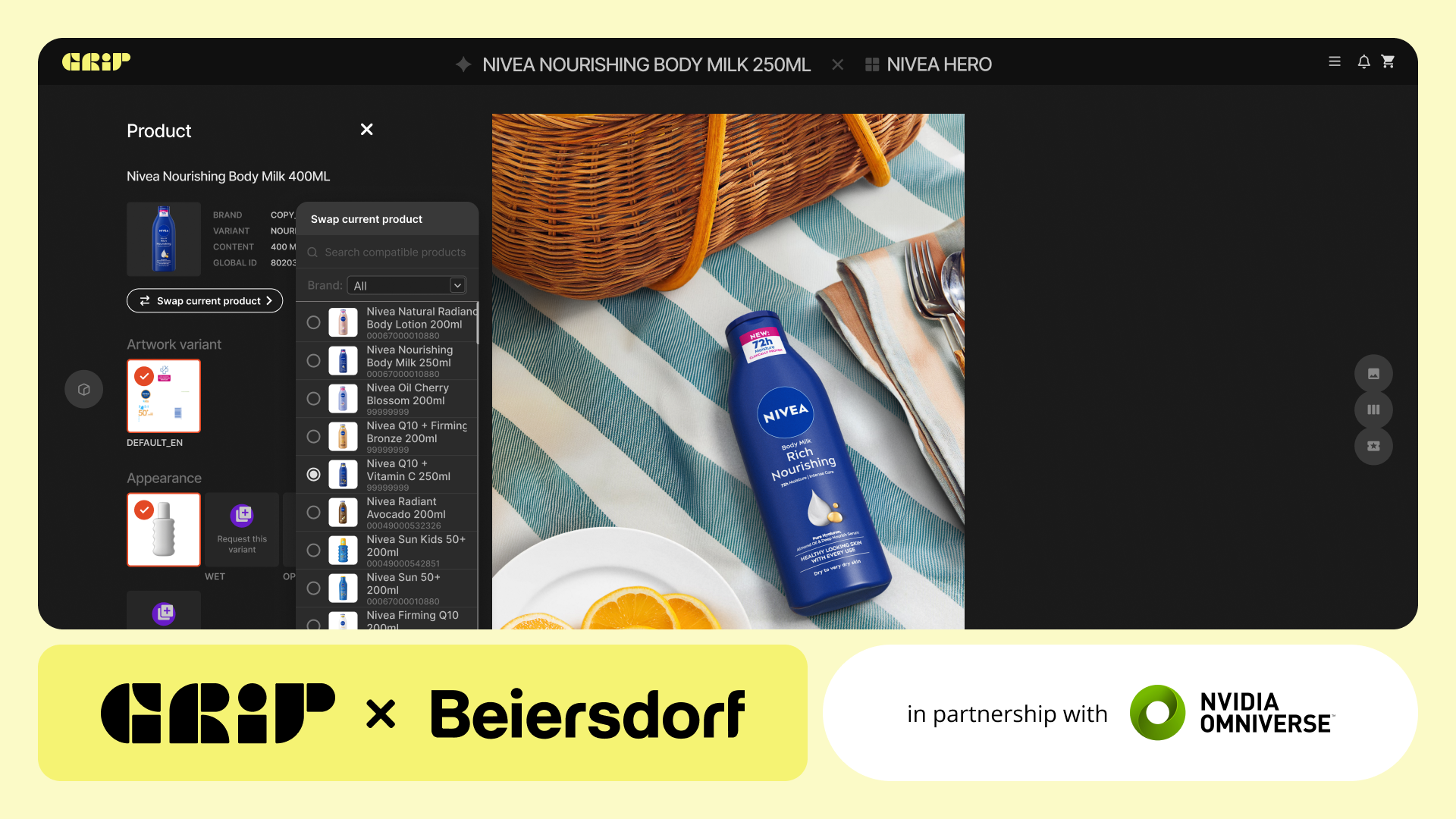
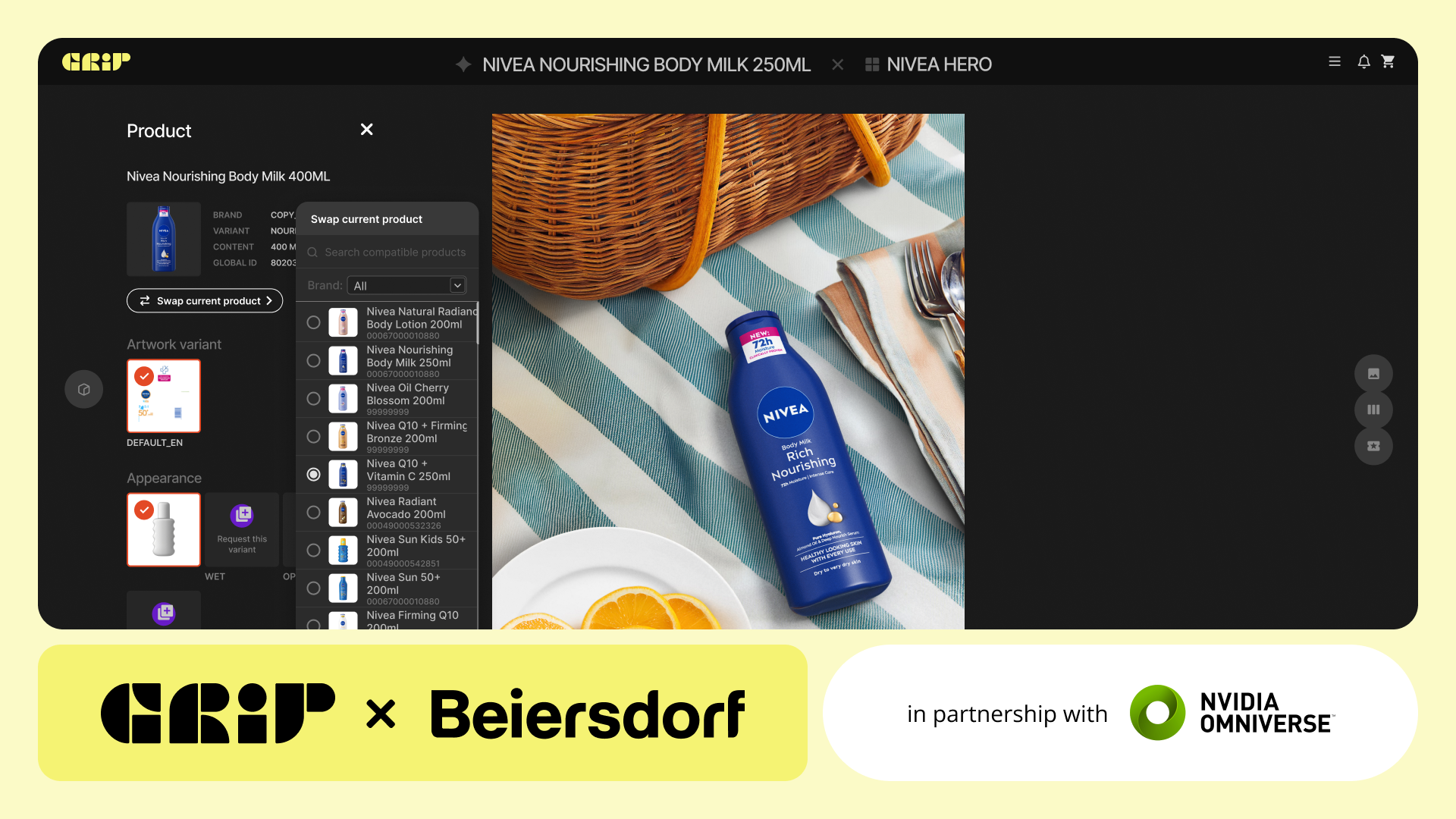
Moët Hennessy, the wine and spirits division of LVMH, needed luxury-quality visuals for more than 25 maisons in over 70 markets, each with its own cultural nuances. Its teams now create, adapt and deploy visuals through Grip, and have delivered over 3 million content variations globally, at twice the speed. Opella brought its e-commerce content production into one central setup while local teams kept the room to move fast. Beiersdorf combined digital twins of its portfolio with AI-enabled content configurators to localize advertising for brands including NIVEA and Eucerin. In each case one central system serves many brands and markets, the platform-team pattern described above.
Where ops can start
As content demand outgrows what coordination can deliver, the ops role moves toward running content production as a system. A practical first step is the one-month toil audit above, which shows where encoding brand rules and product truth would remove the most repetitive work.
For the wider operating picture, read what is a content supply chain (and how to fix it), or talk to the Grip team about what this could look like for your organization.
Frequently asked questions
What is the difference between creative operations and project management?
Project management delivers individual projects on time and on budget. Creative operations designs and improves the system all creative projects run through: how work comes in, how it is resourced and produced, which rules it must meet, and how it is measured. A project manager runs a campaign; creative ops makes every campaign easier to run.
Is content operations the same as content marketing operations?
Largely, yes. Content marketing operations is content operations applied to the marketing program: the processes, tools and team behind the content that marketing produces. Content operations can also cover product, support and editorial content.
What is the difference between content operations and content strategy?
Content strategy decides what to say, to whom and why. Content operations decides how that content gets made, approved and delivered, at what cost and quality. Strategy sets the destination; operations builds the road.
What is AI content operations?
AI content operations is content operations in which AI agents and generative models do part of the production and checking work, such as normalizing product data, generating variants or checking specifications. The ops role shifts toward defining the rules, data and quality gates those systems work within.
What metrics should creative operations track?
Operational metrics rather than campaign results: lead time from brief to live, variants delivered per week, first-pass approval rate, rework and re-shoot rate, cost per live asset, the share of team time spent on repetitive work, and how quickly a non-compliant asset can be corrected in every market.
References
- ANA, “The Continued Rise of the In-House Agency: 2023 Edition” (162 members), 2 May 2023.
- Gartner, “Gartner 2026 CMO Spend Survey Finds CMOs Allocate 15.3% of Marketing Budgets to AI, But Only 30% Are Ready to Scale AI Capabilities,” press release, 11 May 2026.
- Gartner, “Gartner Survey Finds 63% of Marketing Leaders Plan to Invest in Generative AI in the Next 24 Months,” 23 August 2023.
- Chiefmartec, “2025 Marketing Technology Landscape,” 6 May 2025.
- Google, Site Reliability Engineering, Chapter 5, “Eliminating Toil.”
- Team Topologies, “The four fundamental team types.”
- DORA, “DORA’s software delivery metrics: the four keys.”
- Adobe, “Adobe research finds demand for content will grow 5x by 2027,” Adobe for Business blog, 16 June 2025 (research across more than 1,600 marketers).
- Adobe, “Australian marketing teams brace for more than 5x growth in content demand by 2027,” 16 September 2025.
- BCG, “Why Most CEOs Are Failing Marketing’s New Math Test,” 29 September 2026.
- MarketingTech News, “More than half of content produced is never activated” (CreativeX research), 16 January 2024.
About Grip
As INDG’s software branch, Grip is a visual content configuration engine powered by NVIDIA Omniverse that makes it possible for large enterprises to use AI at scale. It breaks existing content down into configurable modules, allowing brands to swap out any element, including products, talent, accessories, and branding assets, with complete control and accuracy. Grip integrates with existing workflows to automate product swaps and generate endless, hero-quality content variation, without disrupting established content production processes.