Brand consistency across markets and channels


Brand consistency means presenting a brand in a recognizably similar way wherever and whenever people meet it: the same distinctive assets, product depiction, core message and tone across markets, channels, formats and years.
Consistency is often confused with uniformity. A global brand can run different scenes, languages, offers and formats in every market and still be consistent, as long as the few elements that make it recognizable stay fixed. The evidence also points to a second dimension that most guides skip, consistency over time. Brands that keep their campaigns and assets for years tend to outperform brands that keep changing them. This guide covers why brand consistency matters, what to keep fixed and what to flex, two popular myths, where inconsistency comes from, how AI affects it, and how to maintain brand consistency at scale.
What is brand consistency?
Brand consistency has two dimensions:
- Across touchpoints. The brand looks, sounds and behaves the same way in every market, channel and format at a given time.
- Over time. The brand keeps its distinctive assets, campaign ideas and tone long enough for people to learn them.
Both depend on a short list of elements that never change, applied every time the brand appears, with freedom everywhere else.
Why brand consistency matters: the evidence
The strongest evidence comes from studies of advertising effectiveness:
- Consistent brands grow more. In a 2024 System1 study of IPA Effectiveness Databank data, covering more than 4,000 ads from 56 brands in 44 categories over five years, scored on 13 consistency features such as positioning, creative idea, assets, tone and characters, the most consistent 20% of brands achieved 28% more very large business effects and 27% more very large brand effects. At the same spend, they were projected to grow market share more than twice as effectively over five years as the least consistent brands.
- Changing agencies costs consistency. In the same study, brands that kept their agency averaged 3.0 stars on System1’s creative rating, against 2.3 for brands that changed agencies two or more times.
- Recurring devices work. System1 has found that campaigns with a “fluent device”, a recurring character or scenario, were 23% more likely than average to produce a very large market share gain, and that characters a brand owns were nearly twice as effective at growing share as celebrities. These are System1’s own analyses; the character finding draws on the IPA Databank.
- Familiarity is liked. In experiments published in the Journal of Marketing Research in 2004, Angela Lee and Aparna Labroo found that brands that came to mind more easily were evaluated more favourably.
Researchers at the Ehrenberg-Bass Institute explain the mechanism. Memories decay, so distinctive assets have to be used consistently or they are lost, and refreshing them too often turns a long-term investment into a short-lived trend.
Two brand consistency myths to drop
Two of the most quoted statistics in brand consistency guides don’t stand up:
- “Colour increases brand recognition by up to 80%.” The figure is usually traced to research by Ellen Hoadley of Loyola University Maryland, published in 1990. That study tested how colour affected decision makers’ ability to read graphs and tables, not brand recognition.
- “It takes five to seven impressions to remember a brand.” Its origin has not been traced to a primary study. Earlier rules of thumb gave different numbers, from about 20 exposures in Thomas Smith’s 1885 book Successful Advertising to three in Herbert Krugman’s later work.
Colour and repetition both matter, and the effectiveness studies above are a sounder basis for saying so.
What to keep fixed and what to flex
| Keep fixed | Let flex |
|---|---|
| Distinctive assets: logo, colours, shapes, characters, sonic cues | Format, aspect ratio and length for each channel |
| How the product is shown: pack, shape, colour, label | Language, copy and local references |
| Core positioning and campaign idea | Scenes, settings, casting and seasons |
| Tone of voice | Offers, promotions and calls to action |
| Rules for claims and legal copy | Retailer and platform conventions |
Global brands show how this works. Coca-Cola launched its Real Magic platform in 2021, its first new global brand platform since 2016, with the “Hug” logo as a shared visual signature and a code-hunt promotion run in select markets. Mastercard dropped its name from its brand mark in some uses in 2019, saying that more than 80% of people recognized its interlocking circles without it. The circles had been consistent since 1966. Marketing localization covers how global teams set these limits for local markets.
Consistency over time
Brands lose consistency over time as well as across markets. A new marketing team, a new agency or simple boredom with a long-running campaign can prompt a refresh that throws away what people had learned. Kantar’s 2026 analysis of distinctive assets pointed to Cracker Barrel’s 2025 rebrand, which removed familiar brand cues and alienated core customers. Arnott’s, the Australian biscuit maker, shows the opposite. It reported a gross-profit return of $2.60 per dollar in the first six months of a masterbrand campaign launched in 2022, rising to $3.36 in the second year, built around a tagline at least 60 years old.
Kantar’s figures point the same way. In its 2026 analysis, brands with strong distinctive assets were 52% more salient than brands with weaker ones and had 76% higher Demand Power. Kantar did not publish the sample, so treat these as directional.
Where inconsistency comes from
Guidelines alone rarely prevent inconsistency, which tends to come from how content is produced:
- Many producers. In a 2023 ANA survey, 82% of ANA member companies had in-house agencies, up from 42% in 2008. A 2018 WFA survey of 50 multinational marketers found that 81% used multiple agencies managed individually by marketing, the most common of several agency models they ran.
- Many formats. A single campaign has to work across platforms with different requirements. Meta lists 17 video placements, TikTok accepts vertical, horizontal and square video, Google’s Demand Gen campaigns take images in four aspect ratios and video in four, and Amazon’s DSP specifies five fixed desktop display sizes and four for mobile. Every format is another chance for the logo, the product or the message to shift.
- Many markets and languages. Each market adapts the content, often with its own agencies and tools.
- Many refreshes. Teams change assets that were working, before the market had learned them.
Each of these adds people and tools that interpret the brand afresh, so consistency at scale depends as much on how content is made as on the guidelines themselves.
Brand consistency and AI
Generative AI multiplies output, and the tools themselves acknowledge that fine details are hard to keep consistent. Midjourney’s documentation for its character reference feature said in 2024 that it would not copy exact details such as freckles or t-shirt logos. Google’s 2025 prompting guide for its Gemini image model noted that keeping a character’s features fully consistent can take follow-up prompts and that features can drift after many edits. Researchers presenting ConsiStory at SIGGRAPH 2024 described keeping the same subject consistent across prompts as an open challenge.
Logos, labels and exact product details are the elements brand consistency depends on most, and they are the kind of fine detail these tools say can drift. AI brand consistency best practices follow from that:
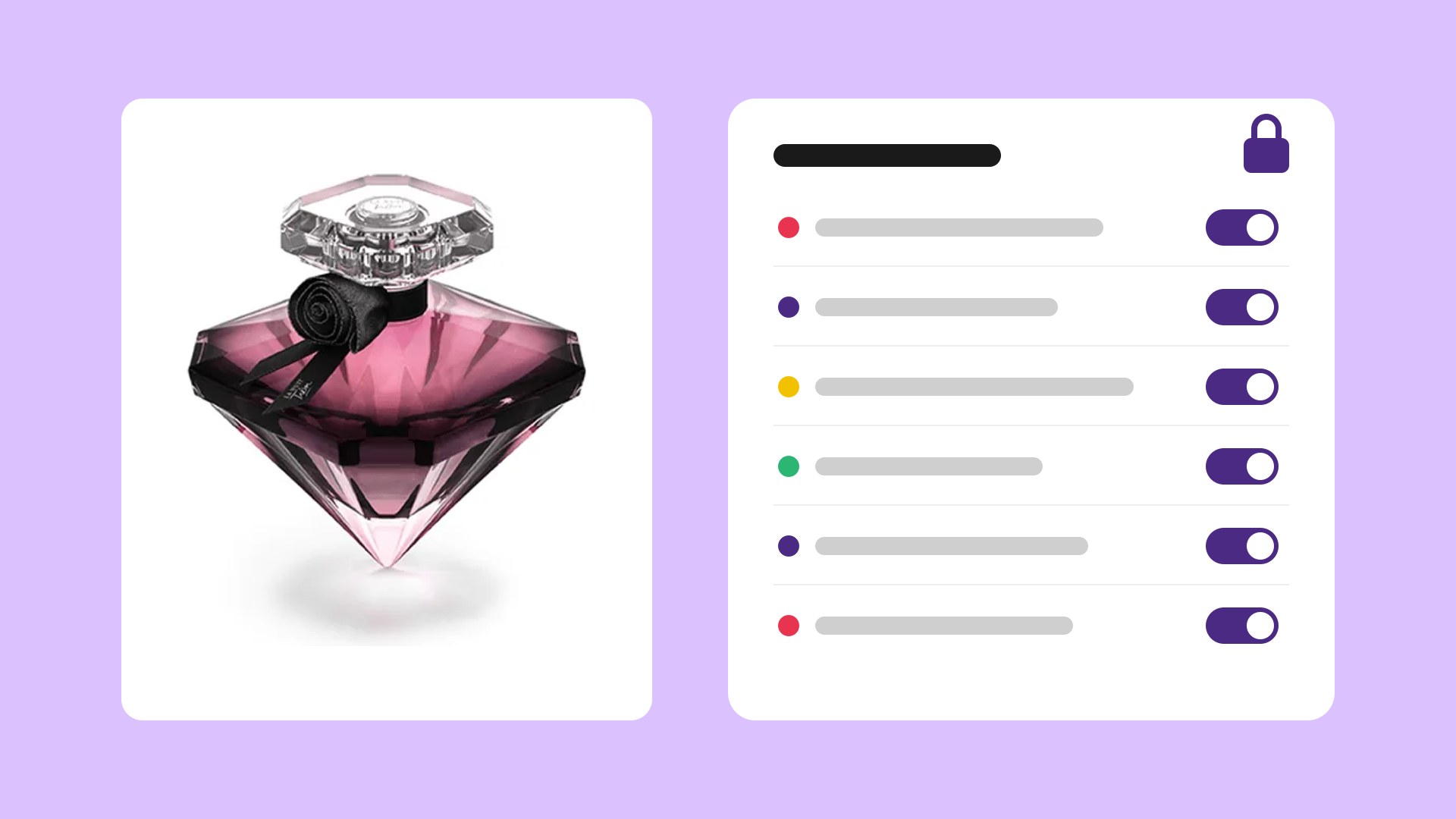
- Keep exact elements out of generation. Put logos, labels and legal copy on locked layers in templates, and take product images directly from a digital twin, so these elements appear as approved each time. AI product photography covers where product images can come from.
- Ground what is generated. New scenes and settings generated around a digital twin or approved master get the product’s shape, colours and pack from the brand’s own data, which keeps them on-brand by design. Details that must match exactly still come from the twin or a locked layer.
- Encode the fixed elements as rules. Logo placement, colour values, typography and tone rules applied when content is generated, not written into prompts.
- Keep rules outside the model. Models change and are retired, so rules held in the brand’s own system survive a model change. Brand governance for AI covers why.
How to maintain brand consistency
- List the fixed elements. Write down the distinctive assets, product depiction rules, core message and tone that must never change, and the elements that may flex.
- Measure your assets. Test how well people recognize each asset and link it to the brand. Kantar, for example, scores assets on fame, distinctiveness and speed of recognition.
- Encode the rules. Turn the fixed elements into rules that tools apply, rather than a document people interpret.
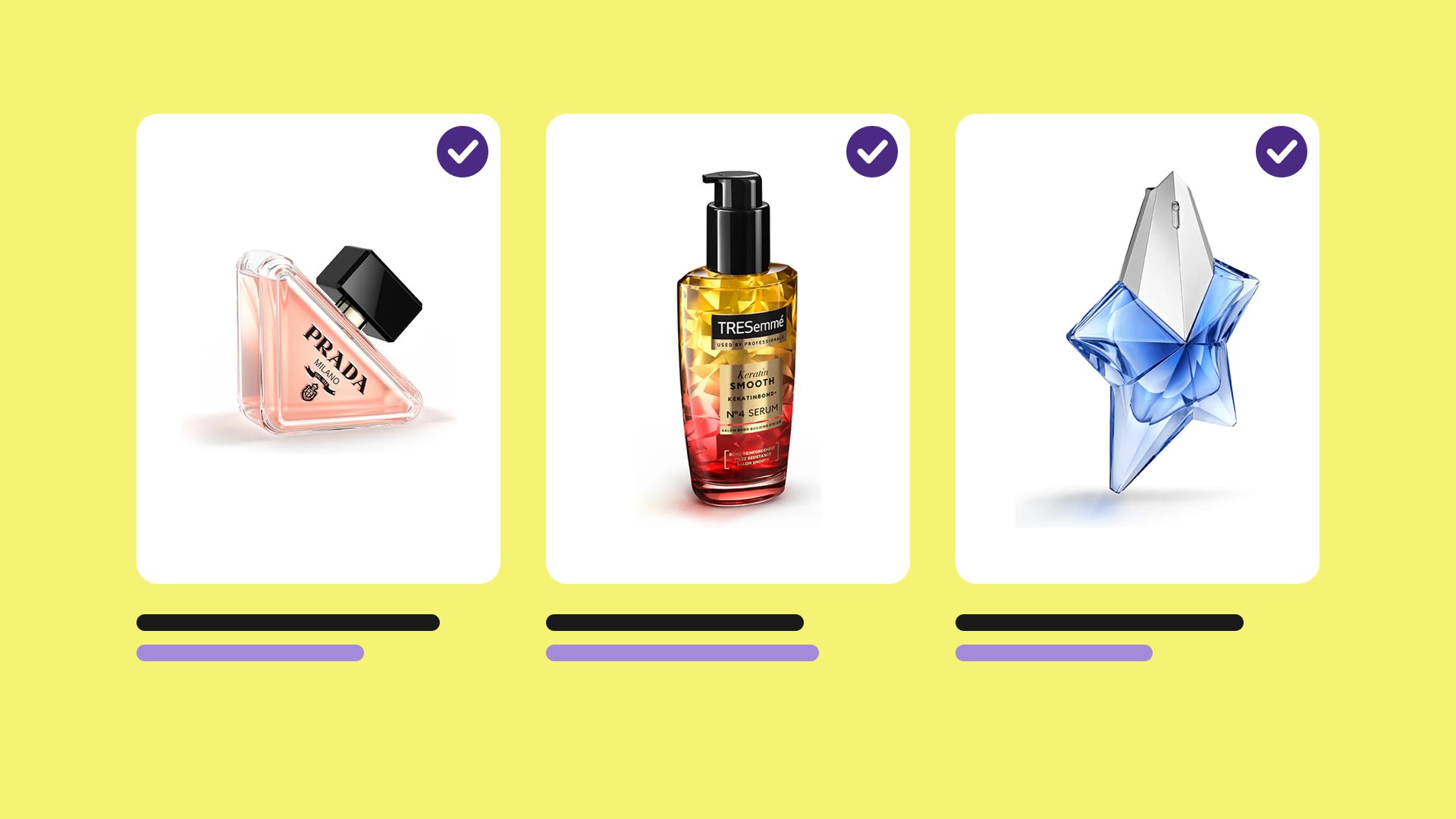
- Show the product from one source. Produce product images directly from a digital twin, or reuse approved masters, so the pack and label are the same in every market and channel.
- Produce every format from the same masters. Create channel versions from one approved source, with the logo and label on locked layers, rather than recreating them for each platform.
- Check before and after publishing. Run automated checks on every asset and periodic audits by market. Brand compliance covers what AI checks can and can’t catch.
- Test changes before rolling them out. When an asset or pack changes, test that the new version is recognized at least as well as the old one, as Ehrenberg-Bass recommends.
Brand consistency checks
A brand consistency check asks four questions of every asset: are the distinctive assets present and correct, is the product shown accurately and in its current version, does the tone and messaging match, and does the asset meet the channel’s format requirements? Checks against encoded rules can run on every asset automatically. Audits by market, done periodically, catch the slower drift that individual checks miss, such as a market that has stopped using a brand character or a retailer showing an old pack.
What it looks like in practice
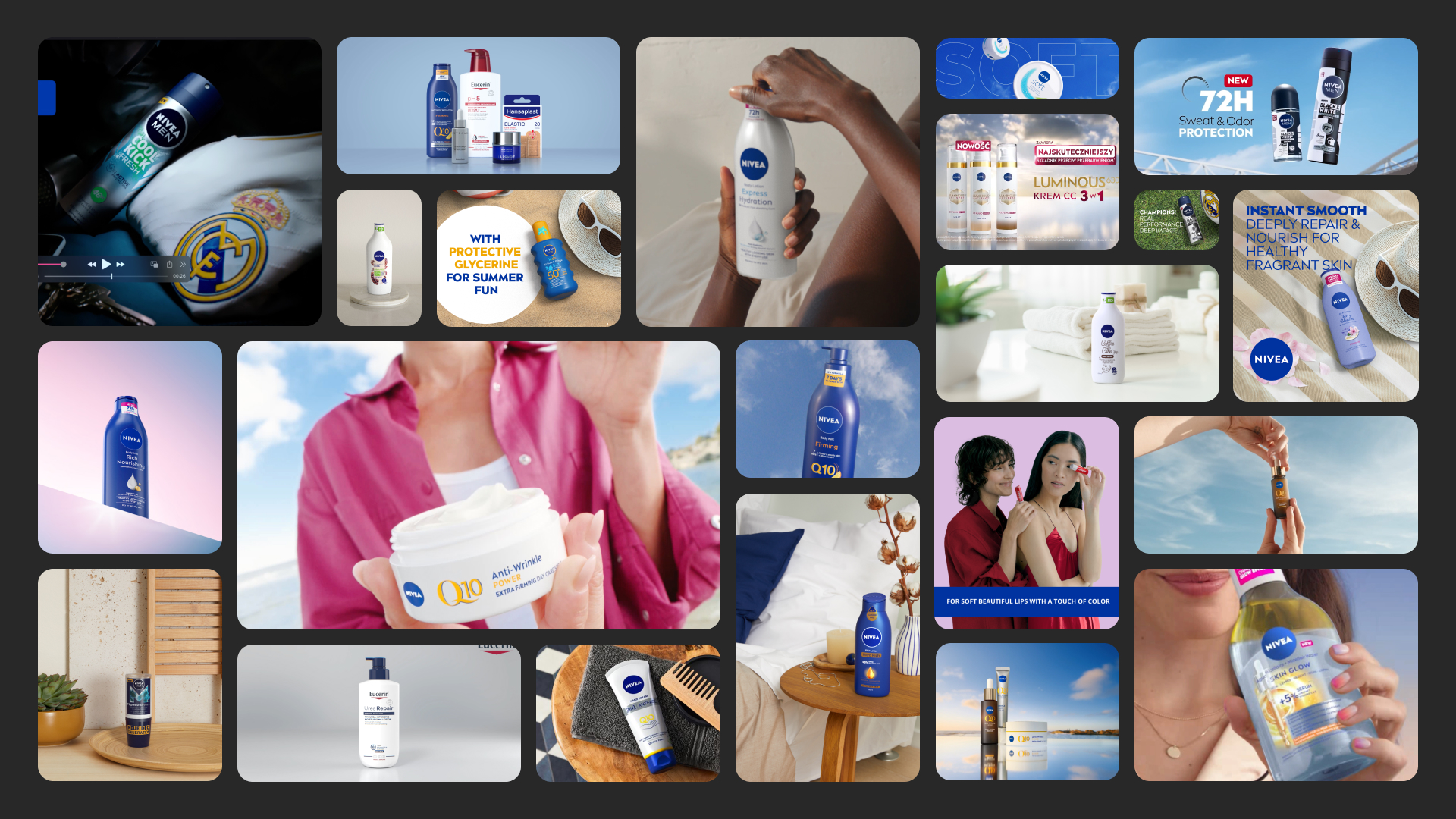
Moët Hennessy, with more than 25 maisons in over 70 markets, uses Grip to give its markets the freedom to be fast and relevant while keeping the desirability of its brands, and its teams have delivered over 3 million content variations globally, at twice the speed. Beiersdorf uses digital twins of its NIVEA and Eucerin portfolio to localize advertising across formats and channels without recreating the product for each one.
Grip is INDG’s enterprise automation platform for publishable marketing content at scale, and for brand consistency it builds the fixed elements into production. Digital Shelf produces packshots and product page images directly from digital twins, so the pack and label match the twin in every market and channel. Adaptations turns a master asset, from Originals, a new campaign or an existing shoot, into versions for each format and market, with elements such as the logo and packshot held on locked layers in its templates. Output from a twin or a locked layer is correct by construction within its domain. Originals generates new scenes from a brief, grounded in the brand’s twins and in the art direction and brand rules encoded in its Brand Center, so what it produces is on-brand by design. Because the twins and rules belong to the brand, the same pack, logo and colours carry into every campaign that follows.
Where to start
Collect a sample of last quarter’s content from three markets and three channels. Lay it side by side and mark, for each piece, whether the fixed elements are present and correct: the logo, the colours, the product, the tone. Then mark what flexed and whether it should have. The pattern shows which elements drift, and where in the production process they drift. For how the rules are set and owned, read brand governance for AI, or talk to the Grip team.
Frequently asked questions
Why does brand consistency matter?
Consistency builds memory. In a System1 study of IPA data on more than 4,000 ads from 56 brands over five years, the most consistent fifth of brands achieved 28% more very large business effects and 27% more very large brand effects, and were projected to grow market share more than twice as effectively as the least consistent brands at the same spend.
How do you maintain brand consistency across platforms?
Decide which elements are fixed, such as the logo, colours, characters, product depiction and tone, and which may flex, such as format, language and scene. Encode the fixed elements as rules, produce every channel’s formats from the same approved masters or product data, check content against the rules before it goes live, and test any change to a brand asset before rolling it out.
What is global brand consistency?
Global brand consistency means keeping a brand’s distinctive assets, positioning and product depiction the same across countries while adapting language, cultural references, scenes and offers to each market. Coca-Cola’s Real Magic platform, for example, launched in 2021 with a shared visual signature worldwide and a code-hunt promotion in select markets.
How does AI affect brand consistency?
AI makes it easier to produce large volumes of content and harder to keep fine details consistent. Image-generation tools acknowledge that exact features, logos and small details can drift between generations or after many edits. Brands keep consistency by placing logos and labels on locked layers or taking the product directly from a digital twin, grounding generated scenes in the brand’s own product data and rules, and checking output against those rules.
What are brand consistency checks?
Brand consistency checks compare content with the brand’s rules before and after it is published: whether distinctive assets are present and correct, whether the product is shown accurately, whether tone and messaging match, and whether each channel’s format requirements are met. They range from automated checks on every asset to periodic audits by market.
References
- IPA, “How creative consistency strengthens brands and business effects,” 9 October 2024.
- System1, Andrew Tindall, “The magic of compound creativity,” with data from the IPA Effectiveness Databank.
- Australian Marketing Institute, on System1, Kantar and Analytic Partners research on running the same core brand campaign, January 2025.
- System1, on the effectiveness of characters in insurance advertising, 16 April 2025.
- System1, “How far can you stretch your character?” 15 November 2024.
- Angela Y. Lee and Aparna A. Labroo, “The Effect of Conceptual and Perceptual Fluency on Brand Evaluation,” Journal of Marketing Research 41(2), 2004.
- Ehrenberg-Bass Institute, Q&A with Jenni Romaniuk, “Seven costly sins of brand identity.”
- ReviewInc, on the origin of the “colour increases brand recognition by 80%” claim, 14 August 2024.
- Wikipedia, “Frequency (marketing).”
- The Coca-Cola Company, “The Coca-Cola Company unveils new global brand platform for Coca-Cola trademark,” 29 September 2021.
- Mastercard, “Mastercard evolves its brand mark by dropping its name,” 7 January 2019.
- Kantar, “Look like yourself,” on distinctive brand assets as a growth lever, 27 October 2026.
- ANA, “The Continued Rise of the In-House Agency,” 2 May 2023.
- World Federation of Advertisers, on agency roster arrangements at multinational brands, 12 June 2018.
- Meta, video ads guide.
- TikTok Ads, video ad specifications.
- Google Ads Help, Demand Gen campaign asset specifications.
- Amazon Ads, DSP desktop ad specs.
- Midjourney, “Character references,” 12 March 2024.
- Google Developers, “How to prompt Gemini 2.5 Flash Image generation for the best results,” 28 August 2025.
- Yoad Tewel et al., “Training-Free Consistent Text-to-Image Generation” (ConsiStory), SIGGRAPH 2024.
About Grip
As INDG’s software branch, Grip is a visual content configuration engine powered by NVIDIA Omniverse that makes it possible for large enterprises to use AI at scale. It breaks existing content down into configurable modules, allowing brands to swap out any element, including products, talent, accessories, and branding assets, with complete control and accuracy. Grip integrates with existing workflows to automate product swaps and generate endless, hero-quality content variation, without disrupting established content production processes.